

Fill out the form to download the whitepaper:
By submitting this form, you consent to the terms of our
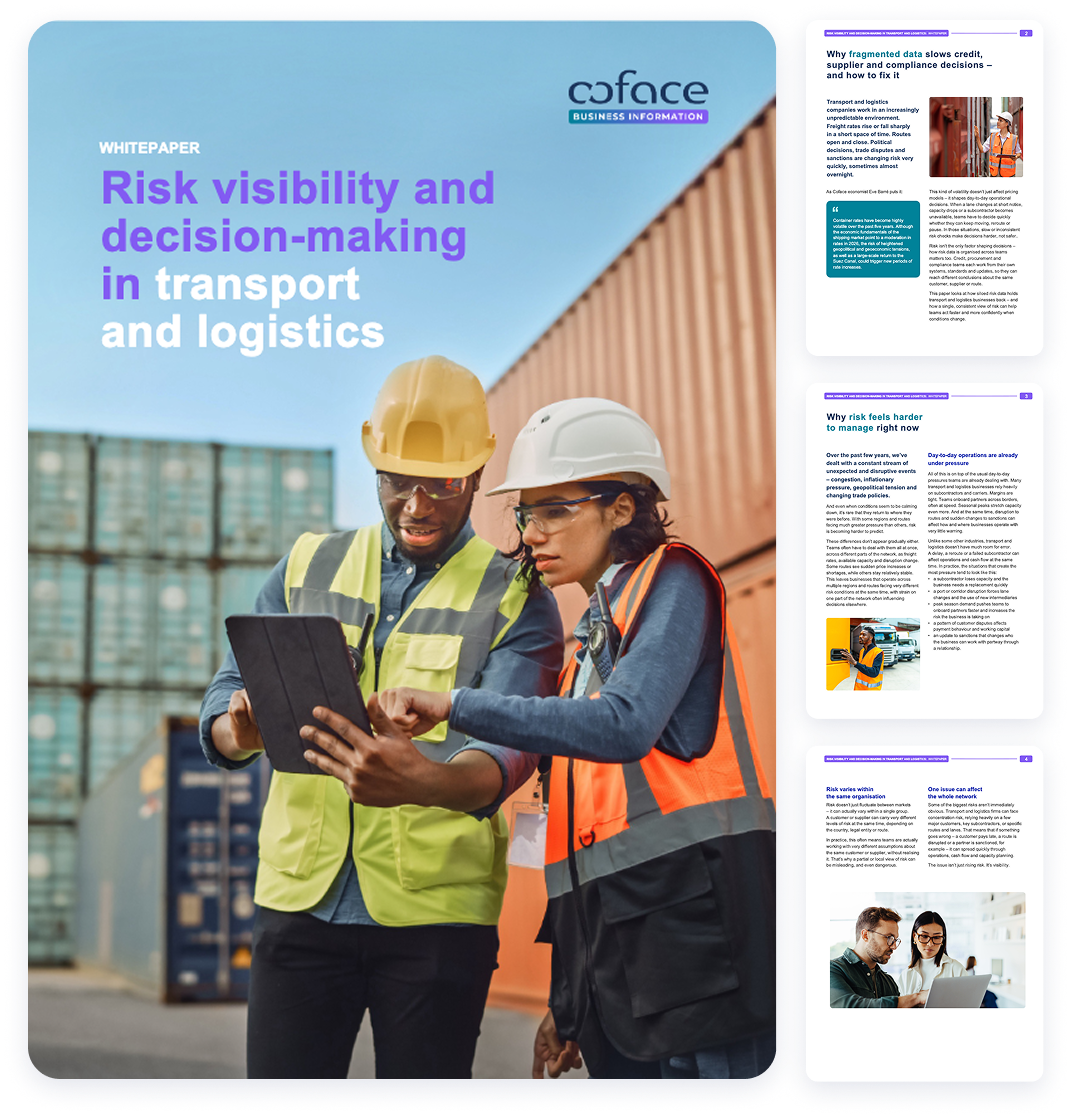
In transport and logistics, conditions, prices and routes change quickly.And global events affect risk with little-to-no warning.
That means teams have to make decisions about customers, suppliers and capacity under pressure. And if different teams make those decisions based on different information, they’ll repeat checks, lose time, and miss small changes as they happen.
By the time they’re ready to deal with an issue, costs have already risen and options are limited.
Urba360 brings credit, supplier and compliance insight into one platform, so teams can work from the same information across regions and roles. It helps them:

Apply the same approach to decisions with one consistent view of risk across customers, suppliers and partners

Act earlier by tracking how risk changes over time (instead of relying on one-off snapshots)

Cut manual work by reducing repeated checks and speeding up onboarding and approvals.
With credit decisions made across multiple markets, GEODIS needed speed and consistency. They moved from separate regional assessments to a shared, real-time view of credit risk - so teams can apply the same standards globally and reduce decision delays.
As Venceslas Fedolliere, Treasury, Financing, and Credit Management Director at GEODIS, puts it:
‘The clarity and standardisation of Coface’s data, combined with intuitive tools like Urba360, have significantly improved our decision-making processes globally.’

Our whitepaper explores how fragmented risk information creates delays and blind spots in transport and logistics – and what changes when teams move to a single, up-to-date view.
Download it to find out:

How fragmented risk data is increasing businesses’ risk exposure – even when their teams are still running checks

Why inconsistent information is slowing down credit, supplier and compliance decisions

What changes when teams work from the same inputs across countries, entities and roles.
© Copyright Coface 2026